

Entrepreneur Workflow Optimization Tips That Reclaim Hours


Author: Ellis Jackson
Entrepreneur workflow optimization is the process of systematically improving business operations to recover time, reduce decision fatigue, and increase output through automation, delegation, and time-blocking techniques. Most entrepreneurs lose hours each week to tasks that could be automated or handed off, yet they keep doing those tasks themselves because no clear system exists to replace them. The good news is that a focused set of workflow management strategies, applied in the right order, can change that fast. This guide covers the highest-impact productivity tips for entrepreneurs, grounded in research and built for real business owners who need results, not theory.
1. Which workflows should entrepreneurs automate first?
The highest-return workflows to automate first are inbox triage, meeting intelligence, and content repurposing. These three areas consume daily attention without generating revenue, making them ideal starting points for business process improvement.

Entrepreneurs deploying systematic automation can recover between 15 and 40 hours per week by focusing on 4–6 high-ROI AI workflows. That number is not a ceiling. It is what focused, phased implementation looks like in practice.
Start with two wins before expanding:
Inbox triage: Use AI-assisted email tools to auto-label, prioritize, and draft replies. A virtual assistant handling email management can take this further by processing your inbox daily so you only see what requires your decision.
Meeting intelligence: Tools like automated transcription and summary software turn every call into searchable notes without manual effort.
Content repurposing: A single recorded video or podcast episode can feed a week of social posts, email drafts, and blog outlines through AI-assisted workflows.
The principle here is depth over breadth. Mastering a few high-impact workflows consistently outperforms running many shallow automations that nobody maintains.
Pro Tip: Pick two workflows and run them for 30 days before adding a third. Tool sprawl is the fastest way to waste the time you were trying to save.
2. How time blocking and batching improve daily productivity
Context switching is one of the most expensive habits an entrepreneur can have. Each interruption costs 15–25 minutes of recovery time, which adds up to 2–3 hours lost every single day. That is not a minor inefficiency. It is a structural drain on your capacity.
Calendar-based time blocking fixes this by assigning specific work types to specific time slots. The same research shows that time blocking can boost output by 20–40%. The mechanism is simple: your brain stops switching gears and starts going deep.
Here is how to build a time-blocked schedule that holds:
Group similar tasks together. Batch all client calls on Tuesday and Thursday afternoons. Handle all administrative work in one 90-minute block each morning.
Use 50-minute focus sessions. Protecting deep work blocks with a 50-minute focus and 10-minute break rhythm aligns with how founders actually sustain concentration.
Block before the week starts. Schedule your deep work blocks on Friday for the following week. This prevents reactive scheduling from filling your best hours.
Pro Tip: Turn off all notifications during focus blocks. Even a single notification pulls your attention, and recovery time starts over.
3. What are the best practices for delegating tasks effectively?
Effective delegation starts with a clear framework. The three pillars of time management for entrepreneurs are elimination, automation, and delegation. The 80/20 rule applies directly here: 20% of your tasks consume 80% of your time, and most of those tasks are not revenue-generating.
Tasks ideal for delegation share three traits: they are repetitive, they follow a defined process, and they do not require your specific expertise or relationships. Common examples include calendar management, CRM data entry, lead list building, social media scheduling, and customer support responses.
Before you hand anything off, document the process:
Record yourself completing the task once, narrating each decision point out loud.
Write a short standard operating procedure (SOP) from that recording.
Include examples of good and bad outputs so the person taking over has a clear standard.
Virtual assistants are the most practical delegation solution for most small business owners. Soft integration with task documentation and workflow protocols leads to higher reliability and faster onboarding. The more clearly you define the work before handing it off, the less time you spend correcting it later.
Pro Tip: Start by delegating one task for two weeks before adding more. This gives you time to refine the SOP and build trust in the process.
For deeper frameworks on offloading work, R3source covers practical delegation examples built specifically for entrepreneurs who want to scale without burning out.
4. Common pitfalls that slow down workflow optimization
Most workflow optimization efforts fail not because the tools are wrong, but because the process was never captured correctly before automation began. The most common failure in automation is skipping process capture, which causes missed decision points and broken workflows that require constant manual fixes.
Here are the four pitfalls that derail entrepreneurs most often:
Skipping process capture. Automating a task you have never documented fully is like giving someone directions to a place you have never been. Record the task in detail, including every exception and edge case, before building any automation around it.
Tool sprawl. Signing up for five automation platforms and using each one at 20% capacity creates more overhead than it removes. Pick one or two tools and use them well.
No measurement. If you are not tracking actual time saved, you cannot know whether your workflow changes are working. A simple weekly log of hours spent on key tasks is enough.
Full automation of client-facing tasks. Human checkpoints in client-facing automations are not optional. Removing all human review from communications that affect client relationships breaks trust faster than any efficiency gain justifies.
Automation is not immediate. It often takes 1–4 weeks of setup with net zero time savings, but by month two most founders gain 12–18 hours saved weekly. Expect the slow start. The compound gains come later.
The entrepreneurs who succeed with workflow optimization treat it as an iterative process. They build, measure, adjust, and repeat. The ones who fail treat it as a one-time project.
5. How to prioritize tasks when everything feels urgent
Effective task prioritization is not about doing more. It is about doing the right things first. The Eisenhower Matrix, a well-known prioritization framework, sorts tasks into four categories: urgent and important, important but not urgent, urgent but not important, and neither. Most entrepreneurs spend too much time in the “urgent but not important” quadrant.
The fix is a daily planning habit that takes less than 10 minutes. Each morning, write down the three tasks that will move your business forward most if completed today. These are your “must-do” items. Everything else is secondary until those three are done.
Batching decisions also reduces the mental load that slows you down. Pre-commit to recurring choices, such as which day you review finances, which hour you respond to non-urgent messages, and which tasks you will never do yourself. Decision fatigue is a bigger enemy than time scarcity. Pre-committing your deep work blocks removes the daily negotiation with yourself about when to focus.
6. Why measuring your workflow changes matters
Workflow management strategies only compound if you track whether they are working. Most entrepreneurs skip measurement because it feels like extra work. It is actually the step that makes every other step worth doing.
A basic tracking system works fine. Each week, log how long you spent on your top five recurring tasks. After four weeks, compare the numbers. If a task you automated is still consuming significant time, the automation has a gap. If a delegated task keeps coming back to you for decisions, the SOP needs more detail.
Every hour invested in automation workflows like onboarding sequences and content distribution returns 10 to 50 hours of recovered time over the following year. That return only materializes if you keep iterating. Measurement tells you where to iterate next.
Set a monthly 30-minute review on your calendar. Look at what is working, what is breaking, and what new tasks have crept into your schedule that should be automated or delegated. This single habit separates entrepreneurs who build lasting systems from those who keep starting over.
Key takeaways
The most effective entrepreneur workflow optimization strategy combines targeted automation, structured time blocking, and clear delegation protocols applied in sequence, not all at once.
Point | Details |
Automate high-ROI workflows first | Focus on inbox triage, meeting notes, and content repurposing before expanding to other areas. |
Time blocking recovers lost hours | Scheduling focused work blocks can boost output by 20–40% by eliminating context switching. |
Document before you delegate | Write a clear SOP before handing off any task to a virtual assistant or contractor. |
Expect a slow start with automation | Most founders see real time savings only after two months of consistent setup and iteration. |
Measure weekly to keep improving | Track time spent on recurring tasks each week to identify gaps and guide your next optimization. |
Designing workflows around energy, not just hours
Here is what most productivity advice gets wrong: it treats time as the scarce resource. Time is fixed. Energy is not.
I have worked with entrepreneurs who had perfectly structured calendars and still felt exhausted and behind. The calendar was not the problem. The problem was that their highest-energy hours were filled with low-value decisions, and their creative work got whatever was left over.
The shift that actually works is designing your workflow around your energy curve. Most people have a 2–4 hour window each day where their thinking is sharpest. That window belongs to your most important work, not your inbox. Designing systems around energy, not just time, and killing unnecessary decisions is what separates entrepreneurs who feel in control from those who feel perpetually behind.
The other thing I have seen consistently: entrepreneurs who automate and delegate the right tasks do not just save time. They show up differently. They make better decisions. They are more present in client conversations. The operational relief creates mental space, and that space is where real growth happens. Protecting your calendar from reactive interruptions is not a luxury. It is the foundation everything else is built on.
— Ellis
R3source can handle the tasks that are slowing you down
Building a better workflow is easier when you have the right support behind you. R3source provides dedicated offshore virtual assistant professionals from the Philippines who integrate directly into your operations, handling the daily tasks that pull you away from revenue-generating work.
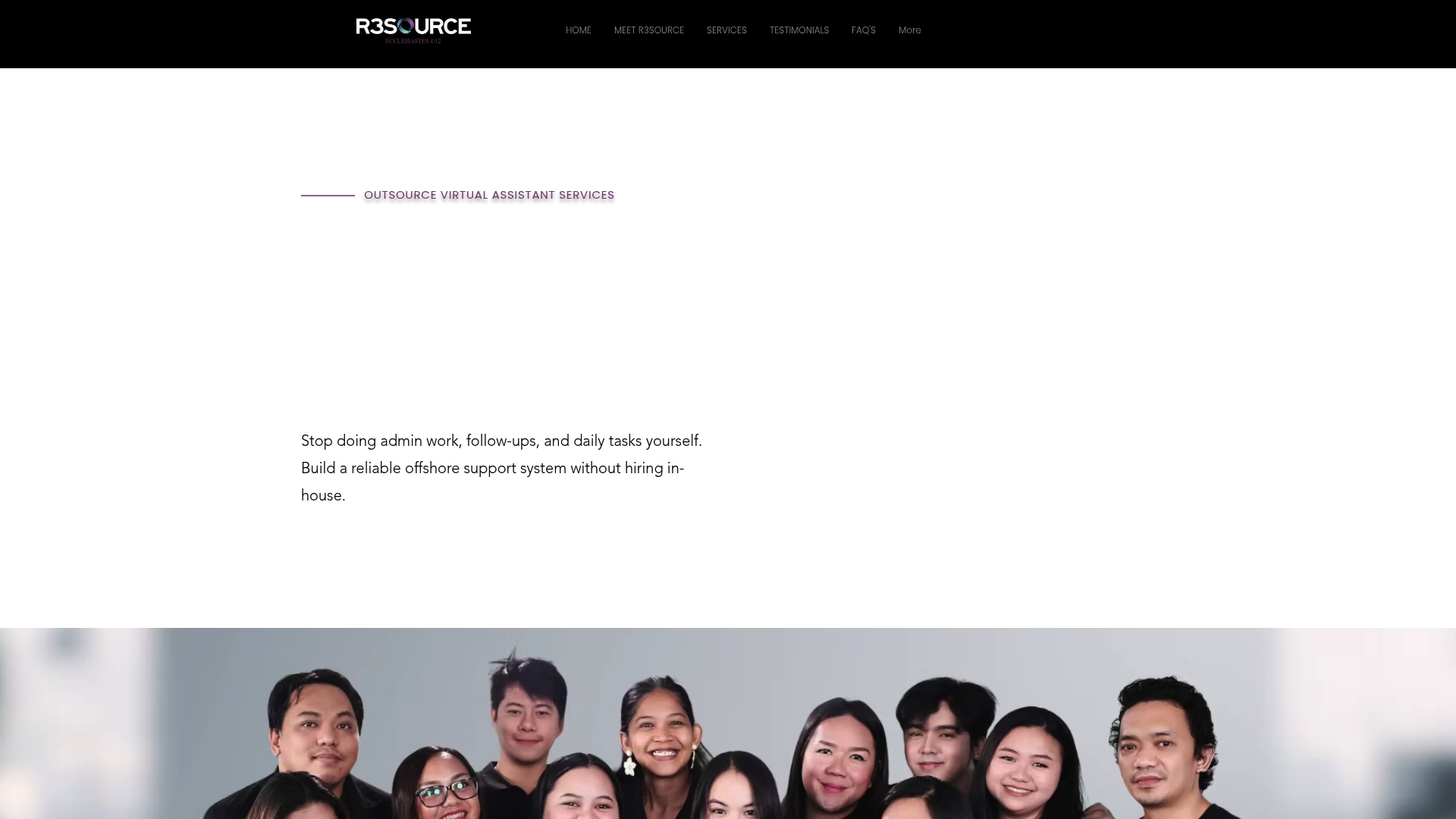
R3source virtual assistants cover administrative support, CRM management, customer service, appointment setting, lead generation, and more. Each team member is trained to follow your processes and work within your existing systems. You get consistent, accountable support without the overhead of a full-time hire. If you are ready to put these workflow strategies into practice with real help behind them, book a free consultation and see what the right support system can do for your business.
FAQ
What is entrepreneur workflow optimization?
Entrepreneur workflow optimization is the process of improving business operations to recover time and increase output through automation, delegation, and structured scheduling. The goal is to remove low-value tasks from the entrepreneur’s plate so they can focus on revenue-generating work.
How many hours can automation realistically save each week?
Entrepreneurs who focus on 4–6 high-ROI automation workflows can recover between 15 and 40 hours per week. Most see meaningful savings only after two months of consistent setup and iteration.
What tasks should entrepreneurs delegate first?
Repetitive, process-driven tasks with no need for the owner’s direct expertise are the best starting points. Common examples include inbox management, CRM data entry, appointment scheduling, and social media posting.
How does time blocking help with productivity?
Time blocking assigns specific work types to fixed calendar slots, which reduces context switching. Research shows it can boost output by 20–40% by giving the brain uninterrupted time to go deep on one type of work.
What is the biggest mistake entrepreneurs make when automating workflows?
Skipping process capture before building automation is the most common failure point. Recording the task in full detail, including every decision and exception, before automating prevents broken workflows and constant manual fixes.
Recommended
Comments