

5 Daily Routines Remote Project Coordinators Use and When to Outsource

A remote project coordinator keeps projects moving from a distance by managing the details a project manager doesn’t have time to chase down. That means maintaining documentation, scheduling and running virtual meetings, tracking timelines against milestones, and reporting status to stakeholders who never see the coordinator in person. The role is built on structure and communication, not authority, since a coordinator organizes work rather than directing it.
TL;DR:
Remote project coordinators focus on maintaining organized documentation and tracking project progress to prevent delays and ensure transparency.
They use specific tools like Asana, Trello, or Jira for task management, and their success depends on clear communication, follow-up discipline, and proactive capacity awareness.
Building routines such as daily triage, standardized meetings, and weekly status reports within the first month is essential before transitioning to full project management.
Long-term dedicated staffing offers consistency, reduces turnover, and enhances familiarity with company workflows compared to training new freelancers frequently.
Salaries average around $69,679 annually in the US, with higher pay linked to certifications, tool proficiency, experience, and demonstrated initiative.
Table of Contents
What Are the Core Responsibilities of a Remote Project Coordinator?
Every duty on a coordinator’s plate exists to answer one question for the team: where do things stand right now? Coursera’s breakdown of the role confirms this centers on creating and updating project plans, documenting lessons learned, and keeping remote channels organized so nothing gets lost between time zones.
Here’s how that plays out in practice:
Documentation control. Files get version numbers, an assigned owner, and a single home, usually a shared drive or a platform like Confluence, so nobody is working off an outdated draft.
Meeting coordination. A good coordinator sends the agenda 24 hours ahead, runs the meeting on time, and turns raw notes into a decisions log the same day.
Timeline and milestone tracking. Coordinators watch deadlines against the plan and flag slippage early, before a two-day delay becomes a two-week one. Tools like the milestone tracking templates from Roadbase show how a simple visual tracker catches drift faster than a status meeting does.
Budget basics. Coordinators monitor spend against the approved plan; they rarely approve new spend themselves, since that stays with the project manager or sponsor.
Stakeholder liaison work. This includes weekly summaries, quick-turn answers to client questions, and knowing which updates need a phone call instead of an email. Remote’s job description standards list this liaison function as one of the most consistently required duties across postings.
What Does a Typical Day Look Like for a Remote Coordinator?
Most days follow a predictable rhythm, which is exactly the point. A coordinator who improvises the schedule daily burns hours re-deciding priorities that should already be routine.
Morning triage. Scan inbox and project channels for overnight messages from teams in other time zones, and flag anything urgent before the daily stand-up.
Async or live stand-up. Post or lead a short update covering blockers, today’s priorities, and anything needing a decision.
Task and tracker updates. Move completed items forward, log new requests, and confirm owners for anything unassigned.
Midday stakeholder check-ins. Answer client or leadership questions and escalate anything that needs a decision above the coordinator’s authority.
End-of-day wrap and weekly report. Update the master tracker and, on report days, send a summary covering progress, risks, and next steps.
A typical micro-workflow looks like this: a stakeholder requests a change, the coordinator logs it, assigns an owner, tracks it through the sprint board, confirms delivery, and closes the ticket with a note in the project log.
Pro Tip: Build a five-minute end-of-day habit: update the tracker, flag anything red, and send one Slack message summarizing the day. It sounds small, but it’s the single routine that prevents Monday morning chaos.
Which Tools and Skills Do Remote Coordinators Need?
Job postings for this role consistently name the same tool categories, which makes the skill list easier to prepare for than it looks. Platforms like Asana, Trello, Monday, and Jira handle task tracking, while Slack or Microsoft Teams cover daily communication and Google Workspace or Microsoft Office handle documents and reporting. Listings on Indeed show these tools appear as required or preferred skills in the majority of remote coordinator postings.
The software matters less than what you do with it, though:
Digital communication literacy. Writing a clear, concise async update that doesn’t require a follow-up question is a skill most coordinators have to practice.
Follow-up discipline. Action items without a deadline or owner die quietly; strong coordinators close that loop before the meeting ends.
Time and activity awareness. Basic familiarity with remote time-tracking practices helps coordinators spot capacity issues before deadlines slip.
Certifications. A CAPM or entry-level Project Management Institute credential helps on paper, but demonstrated tool proficiency and remote experience carry more weight in most hiring decisions.
How Do You Succeed as a Remote Project Coordinator?
The coordinators who thrive remotely tend to build systems that work without them in the room, not systems that depend on their constant presence.
Set communication SLAs. Tell your team you respond to Slack within two hours and email within one business day, then stick to it.
Visualize progress publicly. A shared dashboard means stakeholders check status themselves instead of pinging you for updates.
Avoid becoming the bottleneck. If every decision routes through you, you’ve built a fragile process, not an efficient one.
Run short, outcome-focused meetings. Fifteen minutes with clear action items beats an hour of open discussion.
Standardize onboarding. New vendors or stakeholders should get the same welcome packet and tool walkthrough every time.
Pro Tip: Create one onboarding document for new stakeholders covering communication norms, tool access, and reporting cadence. Reusing it saves hours every time a new person joins the project.
Project Coordinator vs. Project Manager: Where Does This Role Lead?
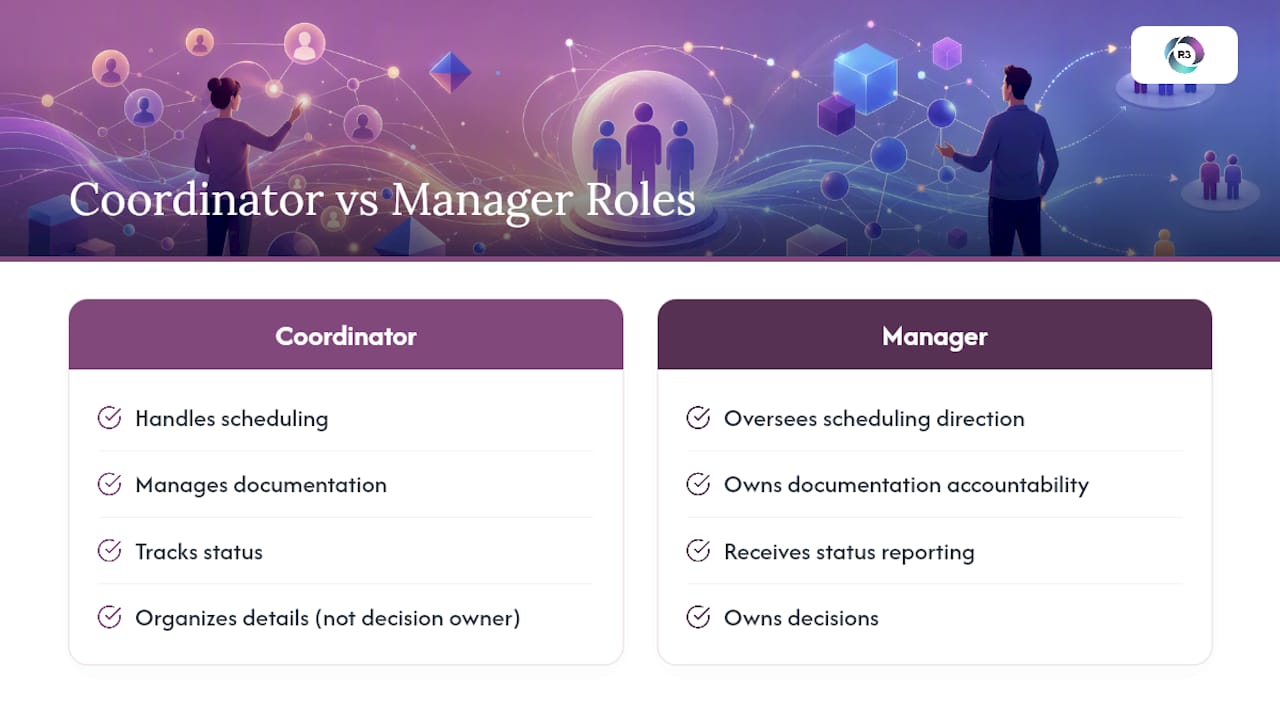
A project coordinator organizes the details; a project manager owns the decisions, budget, and outcomes. Coordinators handle scheduling, documentation, and status tracking, while managers set strategy, manage risk at a higher level, and answer directly to leadership for results.
Coordinators who move into management roles usually show it first through initiative: catching risks before being asked, proposing process fixes, and running meetings with minimal oversight.
The average salary for a project coordinator in the United States sits around $69,679 per year, or roughly $33 an hour, though pay shifts with experience, location, and company size. Certifications and demonstrated tool fluency tend to push offers toward the higher end of that range. On a resume, quantify remote coordination work specifically: “managed status reporting across a 12-person distributed team” reads far stronger than “assisted with projects.”
How Does R3source Support Businesses That Need a Remote Coordinator?
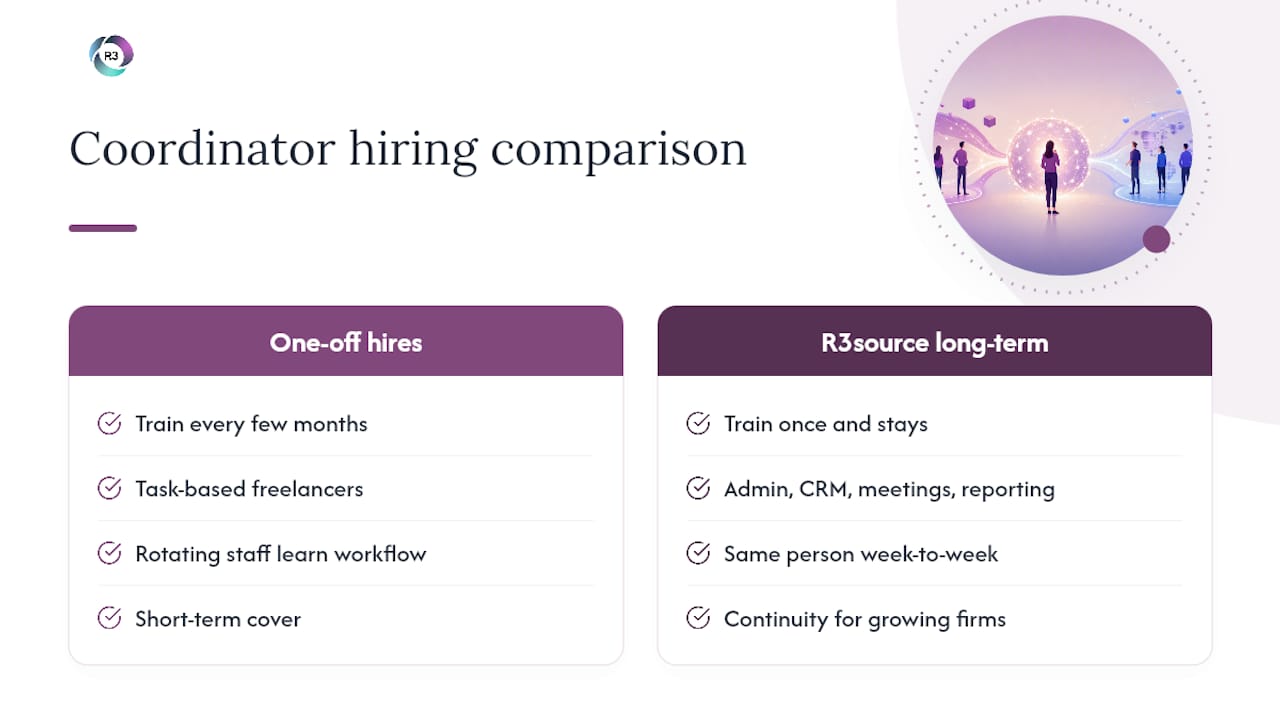
Businesses that hire one project coordinator at a time often end up training someone new every few months. Dedicated, long-term remote staffing avoids that churn by placing a professional who learns your systems once and stays.
R3source’s remote professionals commonly handle administrative coordination, CRM updates, meeting facilitation, and the documentation and reporting duties covered above. Because these are long-term placements rather than task-based freelancers, businesses get consistency: the same person tracking the same project week over week, not a rotating cast learning your workflow from scratch. For growing companies juggling client work and internal operations, that continuity often matters more than any single skill on a resume.
What Should a New Remote Coordinator Focus on First?
Digital communication literacy beats every other skill on this list, because a coordinator’s entire value depends on people trusting the updates they send. In the first 30 days, build three habits: a daily triage routine, a repeatable meeting template, and a weekly status report format you reuse every time. Once those routines feel automatic rather than effortful, that’s usually the signal you’re ready to look toward full project management.
— Ellis
Ready to Add a Remote Project Coordinator to Your Team?
Hiring one coordinator, training them, and hoping they stay is a gamble most growing businesses can’t afford to keep making. This risk can be removed by matching you with a dedicated remote professional trained in the documentation, scheduling, and reporting duties covered above, and integrated directly into your workflow instead of juggled between multiple other clients.
Our offshore virtual assistant services place long-term coordinators who learn your tools once and stick around, so you stop re-training every few months. If you’re ready to see how a dedicated remote coordinator fits your operations, book an introductory consultation and we’ll walk through what the role would look like inside your business.
Sources
FAQ
Can a Project Coordinator Work Remotely?
Yes. Coordination work is largely documentation, scheduling, and communication, all of which translate directly to remote tools like Asana, Slack, and Google Workspace.
What Are the Key Responsibilities of a Project Coordinator?
The core duties include maintaining project documentation, scheduling and running meetings, tracking timelines and milestones, monitoring budget basics, and serving as the main point of contact for stakeholders.
How Much Does a Project Coordinator Get Paid?
The average salary for a project coordinator in the United States is about $69,679 per year, though experience, location, and company size shift that figure up or down.
Is a Project Coordinator an Entry-Level Role?
It’s often considered entry-to-mid level, making it a common starting point for people aiming toward a project manager career path. Businesses that need this coverage without a full-time hire can also access it through a dedicated remote staffing arrangement rather than building the role from scratch.
Recommended
Comments