

How to Outsource to a Virtual Assistant: Owner's Guide


The fastest way to reclaim your time is to outsource to a virtual assistant, define three to five recurring tasks, and start a one-week paid trial before signing any long-term contract. Here is how to move from idea to first hire within a week:
Prepare one job brief listing the tasks, expected hours per week, tools you use, and the outcome you want.
Run a one-week paid trial with a specific deliverable so you can judge quality, communication, and reliability before committing.
Set a recurring weekly check-in (30 minutes, every Monday) to review output, give feedback, and adjust scope.
If you want someone else to handle the vetting, matching, and ongoing oversight, R3source’s managed VA service connects U.S. businesses with dedicated remote professionals from the Philippines, integrated directly into your operations.
Key Takeaways
Outsourcing to a virtual assistant works best when you start with a clear job brief, run a paid trial before committing, and choose a managed provider if you lack the bandwidth to handle vetting and replacement yourself.
Point | Details |
Start with a job brief and trial | Define tasks, hours, and expected outcomes before hiring; run a one-week paid trial to test fit. |
Tier your delegation | Hand off admin tasks in week one, client-facing work in month one, and specialist roles by quarter one. |
Managed vs. freelancer | Choose managed remote staff when you want reliability and oversight handled for you; choose freelancers when you have hiring bandwidth and want direct control. |
Secure access from day one | Use a password manager, apply least-privilege access, and maintain a log of all accounts your VA can reach. |
R3source for managed staffing | R3source matches U.S. businesses with dedicated remote professionals from the Philippines, with training, QA, and long-term integration built in. |
Table of Contents
What does it mean to outsource to a virtual assistant?
Outsourcing to a virtual assistant means hiring a remote professional to handle defined business tasks so you can focus on the work only you can do. The term covers three distinct models, and picking the wrong one costs you time and money.
Freelancer (direct hire): You find, vet, and manage the person yourself through platforms or referrals. Lower headline cost, but you carry all the hiring, training, and replacement risk. Best when you have a clear, bounded task and the bandwidth to manage the relationship.
VA agency (roster/retainer): An agency provides a pool of assistants you can draw from. More availability and skill variety than a solo freelancer, but the assistant may not be dedicated to your account full-time. Best for variable workloads or short-term projects.
Managed dedicated remote staff: A provider matches you with a specific professional, handles payroll and HR, and maintains ongoing oversight of quality and performance. You get the consistency of an employee without the overhead of direct employment. Best for owners who want long-term reliability and minimal management lift.
Hubstaff’s comparison of VA services and freelancers lays out these trade-offs clearly: services offer broader skill pools and availability; freelancers offer direct control but require more management. Knowing which model fits your situation is the decision that shapes everything else.
Why small business owners should outsource to a VA
The real benefit of outsourcing administrative tasks is not just saving hours. It is removing the ceiling on what your business can do.
When you are the only person handling email, scheduling, follow-ups, and client requests, every new customer adds friction. A VA absorbs that friction. You get back the mental space to take sales calls, close deals, and work on the business rather than in it. That shift in focus is where revenue growth actually happens.
Concrete outcomes owners report after bringing on remote support:
More sales conversations: With inbox triage handled, you respond to leads within hours instead of days.
Faster client follow-ups: A dedicated VA running your CRM means no deal falls through because a follow-up email was forgotten.
Consistent operations: Processes run the same way every day, not just when you remember to do them.
Capacity to take on more work: You can accept a new client without burning out because the operational load is shared.
The benefits of a virtual assistant for business owners go beyond time savings. Fewer single-person bottlenecks mean your business is less fragile. One sick day or vacation no longer stalls your entire operation. That resilience is what lets you build something that grows without you being the only engine.
What tasks can you realistically delegate to a VA?
The best place to start is with tasks that are repetitive, well-defined, and do not require your judgment. Think of it as three tiers: low-risk tasks to hand off in week one, higher-impact tasks to transfer in month one, and specialist work to bring in by quarter one.
Week 1: administrative and operational tasks
Email triage and inbox management
Calendar scheduling and meeting coordination
Travel research and booking
Data entry and CRM updates
File organization and document formatting
These tasks have clear right-and-wrong answers. They are easy to document with a short checklist and easy to verify. A LinkedIn task guide confirms that email management, calendar scheduling, and data entry are among the most commonly delegated VA tasks for a reason: they eat time without requiring strategic input.
Month 1: client-facing and marketing support
Customer service responses (chat, email, phone scripts)
Social media scheduling and basic content posting
Lead qualification and outreach follow-ups
WordPress content updates and basic site maintenance (a task many VAs handle well, given how widely WordPress is used as a content platform)
Research and competitive monitoring
Quarter 1: specialist and finance-adjacent roles
Bookkeeping prep and invoice processing
Appointment setting with a structured script
CRM pipeline management and reporting
Industry-specific support (legal intake, medical billing, e-commerce order management)
Generalist VAs handle the first two tiers well. Specialist roles, particularly bookkeeping, legal intake, or medical billing, call for a VA with verified experience in that domain. The small business VA guide from R3source offers practical delegation rules for deciding when a generalist is enough and when you need a specialist.
Pro Tip: Before delegating anything, spend 15 minutes recording a Loom video of yourself doing the task. That recording becomes the foundation of your SOP and cuts onboarding time significantly.
Managed service vs. freelancer: which model fits your business?
The choice between a managed remote staff provider and a direct freelancer hire comes down to one question: how much management capacity do you have?
Dimension | Managed remote staff | Freelancer (direct hire) |
Best for | Owners who want reliability without managing HR | Owners with hiring experience and time to manage |
Pricing model | Monthly dedicated rate or FTE equivalent | Hourly or project-based |
Skill level | Pre-vetted, matched to your needs | Varies widely; you vet yourself |
Management responsibility | Provider handles oversight, QA, and replacement | You manage directly |
Onboarding time | Faster; provider handles initial matching | Slower; you run the full hiring process |
Managed remote staff: strengths and limits
Consistent availability and a backup plan if your VA is unavailable
Provider handles payroll, compliance, and performance monitoring
Higher monthly cost than a solo freelancer
Less direct control over who you work with day-to-day
Freelancer: strengths and limits
Lower headline cost and full hiring control
You choose exactly who you work with
You carry all replacement, vetting, and management risk
Skill quality varies; Forbes notes that as offshoring grows, quality controls and oversight become more important, not less
Decision rules: If you want someone else to manage the relationship, handle replacement coverage, and maintain quality standards, choose a managed service. If you want full hiring control and have the bandwidth to run a proper vetting process, a freelancer can work. Most small business owners who have tried both eventually move toward managed remote staff for the reliability alone.
How to hire a virtual assistant: a step-by-step playbook
Step 1: Audit your tasks and estimate hours
List every recurring task you do in a week. Mark each one as “only I can do this” or “someone else could do this with the right instructions.” Total the hours on the second list. That number tells you whether you need part-time support (10–20 hours/week) or a full-time equivalent.
Step 2: Write a job brief
A strong job brief includes:
The three to five primary tasks and their expected weekly hours
The tools you use (Slack, Asana, Gmail, your CRM)
The outcome you expect (not just the activity, but the result)
Your communication style and availability for check-ins
Whether the role is part-time, full-time, or block-hours
Step 3: Choose your recruiting channel
Managed service (R3source): Best if you want a pre-vetted match and ongoing oversight. The provider handles the search.
Job boards (LinkedIn, Indeed, OnlineJobs.ph): Good for direct hires if you have time to screen applicants.
Referrals: Often the fastest path to a reliable hire, but limited by your network.
Marketplace platforms: Useful for one-off or project-based tasks; less suited for long-term dedicated roles.
Step 4: Interview and test judgment
Use these questions to separate strong candidates from those who sound good on paper:
“Walk me through how you would handle an inbox with 200 unread emails.”
“What tools do you use to stay organized when managing multiple clients?”
“Describe a time a task was unclear. What did you do?”
“How do you handle a deadline when you are waiting on someone else?”
“What does a good SOP look like to you?”
“How do you flag a mistake you made before your client notices?”
“What is your backup plan if your internet goes down?”
“How do you prioritize when three things are urgent at once?”
Step 5: Run a paid trial task
Give the candidate a real task from your actual workload, pay them for it, and set a clear pass/fail standard. A good trial task is something you can evaluate in under 30 minutes: a triage of 20 sample emails, a formatted document, or a short research brief. For detailed vetting criteria and red flags to watch for, the guide to finding a reliable long-term VA is worth reading before you interview.
Step 6: Contract basics
Before work begins, cover these in writing:
NDA and confidentiality clause covering client data, business processes, and proprietary information
Intellectual property assignment (work product belongs to you)
Termination notice period (two weeks is standard for ongoing roles)
Payment terms and trial pay rate
Data handling expectations (which systems they can access, how credentials are stored)
What does outsourcing a virtual assistant typically cost?
Pricing for VA services in the U.S. market follows four common shapes. Understanding each one helps you compare proposals on value rather than just the hourly rate.
Hourly: Common for freelancers and project-based work. Rates vary widely depending on skill level, location, and specialization. General admin support from offshore VAs tends to run lower than U.S.-based generalists; specialist roles (bookkeeping, legal intake) command higher rates regardless of location.
Dedicated FTE (full-time equivalent): A fixed monthly rate for a full-time dedicated professional. This model gives you predictable costs and a person fully focused on your business. For detailed current pricing ranges, the VA cost guide from R3source breaks down what to expect by role and model.
Retainer or hour blocks: You pre-purchase a set number of hours per month. Good for variable workloads, but unused hours often do not roll over.
Project pricing: A fixed fee for a defined deliverable. Useful for one-time tasks but not suited for ongoing operational support.
Budgeting checklist:
Set a pilot budget for the first 30 days (trial pay plus your time to onboard)
Factor in your own management time as a real cost, not just the VA’s rate
Compare proposals on deliverables and oversight included, not price per hour alone
Ask about replacement coverage: if your VA is unavailable, what happens?
Negotiate a short trial period before committing to a multi-month contract
The hidden cost most owners miss is management time. A freelancer at a lower hourly rate can cost more in total when you add the hours you spend vetting, training, and re-hiring after turnover.
Which tools make outsourcing reliable from day one?
The right tools cut ramp time and prevent the most common failure: a VA who does not know what to do next. Keep the stack minimal and purposeful.
Communication
Slack or Microsoft Teams for daily async communication
Email (Gmail or Outlook) for client-facing correspondence
Task management
Asana, Trello, or ClickUp for assigning, tracking, and reviewing work
Documentation
Google Docs or Notion for SOPs, checklists, and reference materials
Loom for screen-recorded walkthroughs of recurring tasks
Time tracking and accountability
Hubstaff or Time Doctor for transparent hour tracking on hourly arrangements
Security
1Password or LastPass for shared credential management (never share raw passwords via email or chat)
Example workflow: email management handoff
Record a Loom walkthrough of your inbox triage process.
Write a one-page SOP: what gets replied to immediately, what gets flagged, what gets archived.
Give the VA access to a dedicated label or folder for their drafts.
Review drafts daily for the first week, then shift to spot-checking.
Set a response-time SLA (for example: all emails triaged within two hours of receipt).
The outsource tasks playbook from R3source has SOP templates and workflow examples you can adapt for your own handoffs. Keep documentation in one place. A single shared Google Drive folder or Notion workspace beats scattered files across email threads every time.
How to onboard a VA in the first 30–90 days
A structured onboarding plan is what separates a VA who hits the ground running from one who spends three weeks asking the same questions.
Day 1 checklist
Grant access to all required tools (email, task manager, CRM, shared drive) with role-appropriate permissions only.
Share an orientation document: your business overview, communication norms, working hours, and escalation path.
Assign two or three small “first win” tasks with clear instructions and a same-day deadline.
Send a welcome email that confirms their schedule, your check-in time, and who to contact if they hit a blocker.
Week 1 checklist
Walk through all primary SOPs together (screen share or Loom review).
Run paired tasks: they do the work, you review and give written feedback.
Hold a 15-minute daily check-in to surface questions early.
Confirm all tool access is working and all credentials are stored securely.
30–90 day ramp
Day 30: VA owns their primary task list independently. You review output weekly, not daily.
Day 60: Set KPIs for the role (response time, tasks completed per week, error rate). Hold a formal 60-day review.
Day 90: Expand scope if performance is strong. Introduce the next tier of tasks. Confirm the engagement is working for both sides.
Pro Tip: Write your SOPs as if you are explaining the task to a smart person who has never seen your business before. Assume nothing. The more specific the SOP, the less time you spend answering questions.
Common pitfalls and red flags when outsourcing to VAs
Most failed VA relationships share the same root cause: unclear expectations set at the start. Knowing the warning signs early saves you weeks of frustration.
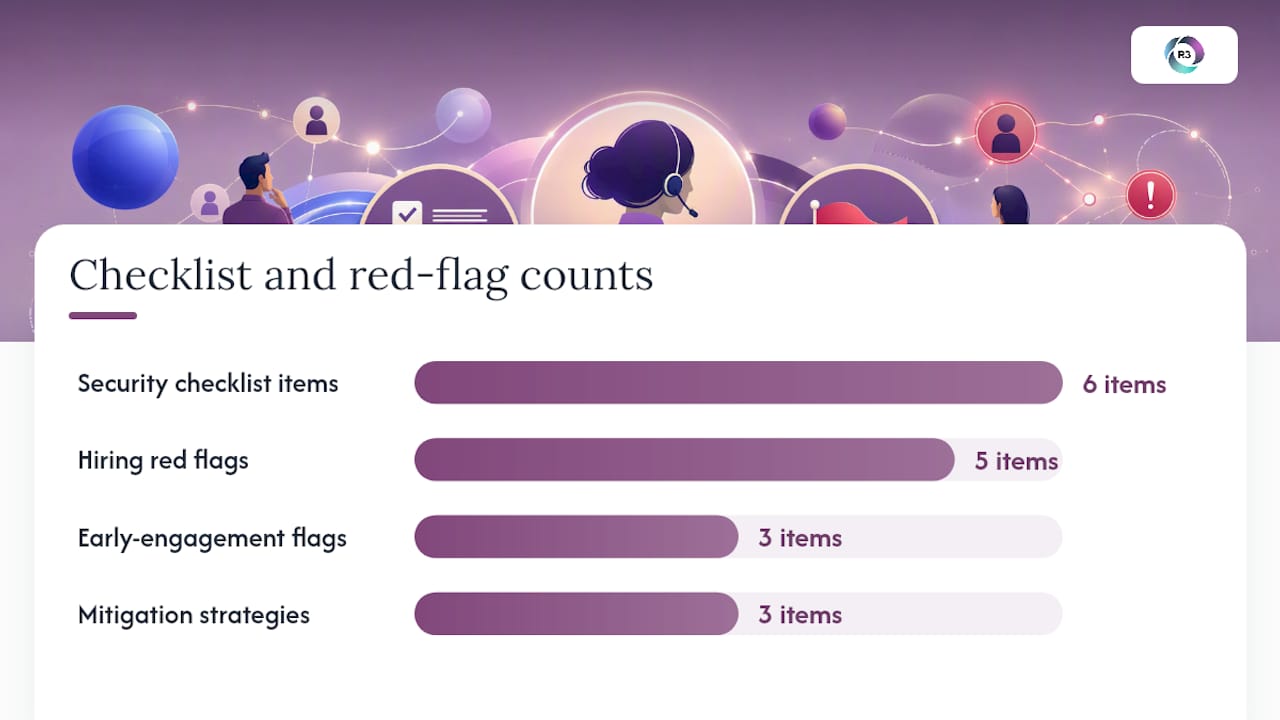
Security checklist before granting access:
Use a password manager (1Password or LastPass) for all shared credentials. Never share passwords in plain text.
Apply least-privilege access: give the VA access only to the systems they need for their specific tasks.
Enable two-factor authentication on all business accounts.
Keep a log of which accounts the VA has access to so you can revoke cleanly if the relationship ends.
If your VA handles marketing tasks involving customer data, review your consent and data-handling practices. The IAB TCF framework is a useful reference for understanding what consent obligations apply when outsourcing marketing work.
Red flags during hiring:
Vague answers about their process (“I just figure it out as I go”)
Resistance to following written SOPs or using your preferred tools
Unable to provide verifiable references from past clients
Inconsistent availability or slow response during the interview process itself
Overpromising on skills without a trial task to back it up
Red flags in early engagement:
Repeated questions about tasks already covered in the SOP
Missed deadlines without proactive communication
Reluctance to use time tracking or share work logs
Mitigation strategies:
Stage access: start with read-only or limited permissions, expand as trust builds.
Write a simple SLA covering response times and escalation steps.
Build a backup plan: know what happens to your operations if the VA is unavailable for a week.
As Forbes highlights, the growth of offshore work makes quality controls and oversight more important than ever. A managed provider handles much of this infrastructure for you; a direct freelancer hire puts it entirely on your plate.
Key security insight: Businesses that use a managed remote staff provider typically inherit the provider’s vetting, access-control protocols, and replacement coverage, reducing the security and continuity risks that fall on owners who hire freelancers directly.
How R3source helps U.S. businesses outsource confidently
R3source specializes in matching U.S. businesses with trained, dedicated remote professionals from the Philippines, with a focus on long-term integration rather than one-off task work. The model is built for small business owners who need reliability, not just availability.
What sets the managed approach apart:
Dedicated professionals: Your VA works exclusively with your business, not across a rotating roster of clients.
Managed match and oversight: R3source handles the vetting, matching, and ongoing performance monitoring so you do not have to build that infrastructure yourself.
Training and QA: Each professional is trained before placement and supported with quality assurance throughout the engagement.
Retention-focused model: The emphasis on long-term relationships means lower turnover and less time spent re-hiring and re-training.
Industry-specific roles: R3source supports businesses in real estate, e-commerce, and service industries with roles ranging from administrative support and customer service to CRM management, appointment setting, bookkeeping, and IT helpdesk.
For U.S. business owners who have tried the freelancer route and found the management overhead too high, a managed remote staffing model removes the friction without removing the control. You still define the tasks, set the standards, and run the check-ins. R3source handles everything behind the scenes.
What working with a managed VA provider actually looks like
The managed model works best when you treat your remote professional as a long-term team member, not a task dispatcher. The businesses that get the most out of this arrangement are the ones that invest in a proper onboarding week, write clear SOPs, and hold consistent check-ins. The provider handles the infrastructure; you provide the direction.
If you are considering a discovery call with R3source, come prepared with your task audit (the list of recurring tasks you want to hand off) and a rough estimate of weekly hours. That conversation moves faster and produces a better match when you know what you need.
Ready to build your remote support team?
R3source gives U.S. business owners a direct path to a dedicated, trained remote professional without the hiring overhead. You get a matched VA from the Philippines, integrated into your daily operations, with managed oversight and quality assurance built in from day one.
The process starts with a free strategy call. Bring your task list, your current tools, and any questions about the managed model. R3source will walk you through the matching process, set realistic expectations for ramp time, and outline what a trial arrangement looks like for your specific situation.
Book your free strategy call and take the first step toward a business that runs without you carrying every task yourself.
Sources
Recommended
Comments